The Distinction Matters
The fitness equipment market broadly divides into two tiers: commercial grade and home or consumer grade. The labels are not just marketing terms — they reflect real differences in materials, construction, tolerances, and expected lifespan. Understanding these differences helps buyers make informed decisions whether they are outfitting a public facility, a private studio, or a dedicated home gym.
Material Differences
Commercial dumbbells and weight plates are built around cast iron cores. Cast iron is denser than the concrete or sand fillers found in many consumer products, which means commercial weights are more compact for their stated weight. This matters in practical terms: a cast iron 20 kg dumbbell is noticeably smaller than a sand-filled 20 kg dumbbell, making it easier to handle and rack.
Rubber coatings on commercial equipment use higher-grade compounds — often recycled rubber processed to commercial specifications — that resist cracking, peeling, and off-gassing over years of heavy use. Consumer rubber coatings tend to be thinner and may degrade more quickly when exposed to chalk, sweat, and frequent impact.
Weight Tolerance and Accuracy
Commercial-grade equipment is manufactured to a tolerance of ±2–3 % of the stated weight. This means a plate marked 20 kg will weigh between 19.4 kg and 20.6 kg. For training purposes, this precision is more than adequate and ensures consistent loading across matching pairs. Consumer products often have wider, undocumented tolerances, meaning a pair of 20 kg dumbbells might differ by a kilogramme or more between the two units.
Durability Under Volume
The defining characteristic of commercial equipment is its ability to withstand thousands of uses per week by hundreds of different people. This demands robust construction at every joint: welds must be flawless, rubber-to-iron bonds must resist repeated shear forces, and surface finishes must endure constant handling. Commercial dumbbells are designed to survive being dropped, stacked, and manhandled in ways that would quickly destroy consumer products.
Home gym equipment is engineered for lower usage volumes — typically one to four users training several times per week. This is perfectly appropriate for its intended purpose, but placing consumer-grade equipment in a commercial setting leads to rapid failure and potential safety hazards.
Design and Ergonomics
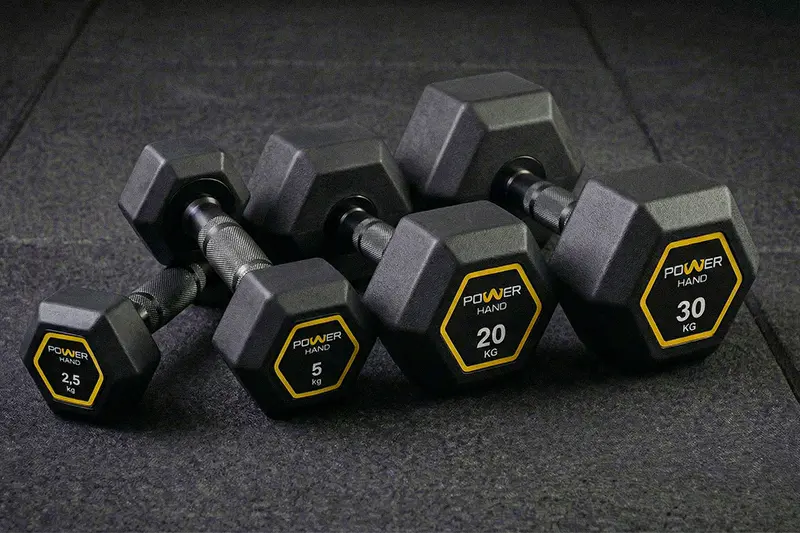
Commercial dumbbells typically feature hex-shaped heads that prevent rolling and flat resting surfaces that allow the dumbbell to stand upright on one end. Knurling on handles is precisely machined to provide consistent grip without being overly aggressive. These design details reflect the demands of a high-traffic gym environment where equipment must be safe, functional, and easy to organise.
Consumer dumbbells may use round heads, smooth handles with rubber grips, or adjustable spinlock designs. These are cost-effective and work well for home use but lack the robustness and safety features required in a shared facility.
When to Choose Commercial Grade
Any facility that serves multiple users on a daily basis should invest in commercial-grade equipment. This includes commercial gyms, hotel fitness centres, university recreation facilities, corporate wellness rooms, and military fitness areas. The higher upfront cost is offset by a significantly longer lifespan, lower replacement frequency, and reduced liability risk.
Serious home gym owners who train intensively may also benefit from commercial-grade equipment. A set of cast iron hex dumbbells with recycled rubber coating will outlast consumer alternatives by many years, making the long-term cost of ownership comparable or even lower.
Conclusion
The difference between commercial and home gym equipment is not about prestige — it is about engineering for purpose. Commercial-grade products are built to last under heavy, shared use, while consumer products serve the lighter demands of home training. Choose the right tier for your application, and your equipment investment will deliver reliable performance for years. Anka Force Sport manufactures exclusively commercial-grade equipment — contact us to discuss your requirements.