Why Testing Matters in Fitness Equipment
Commercial fitness equipment endures extraordinary stress. A single dumbbell in a busy gym may be lifted, dropped, and racked thousands of times per month. Weight plates absorb repeated impacts. Olympic bars flex under dynamic loads far exceeding their static rating. Equipment failure in this environment is not merely inconvenient — it is dangerous. Rigorous testing at every stage of manufacturing is what separates reliable commercial-grade equipment from products that fail prematurely.
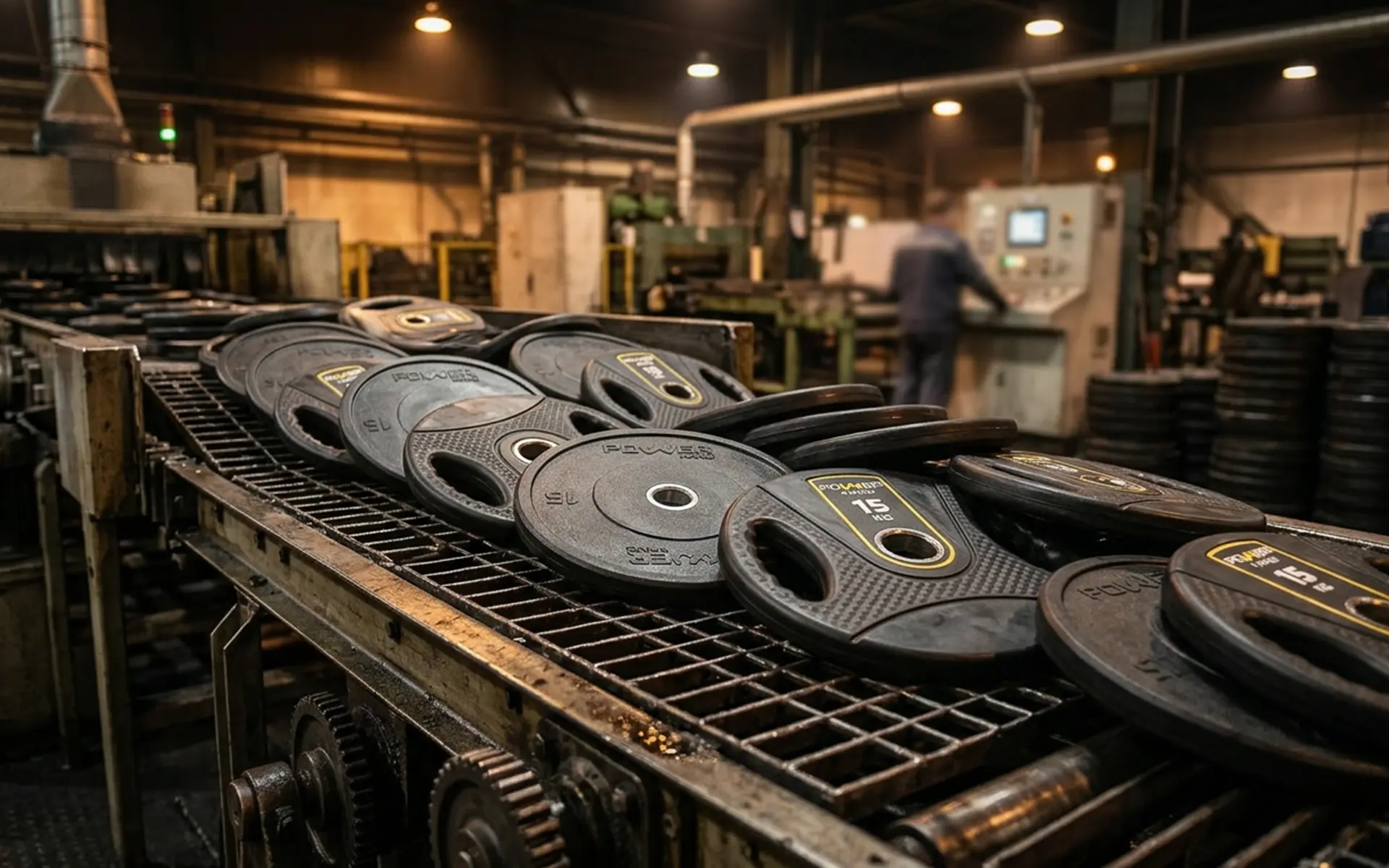
At Anka Force Sport, testing is embedded into our production process at our Çorlu factory, not applied as an afterthought. This article takes you inside the testing protocols that ensure every dumbbell, plate, and bar we produce meets commercial-grade standards.
Raw Material Inspection
Quality testing begins before production starts. Cast iron arriving at the factory is tested for chemical composition — carbon content, silicon levels, and trace elements that affect hardness, machinability, and structural integrity. Each batch of raw material receives a certificate of analysis from the supplier, which our quality team verifies through spot checks using spectrometric analysis.
Rubber — both recycled and virgin — is tested for density, hardness (Shore A durometer reading), and tensile strength. These properties directly determine how the finished product performs under impact. Rubber that is too soft will deform permanently; rubber that is too hard will crack under repeated stress.
Dimensional and Weight Tolerance Testing
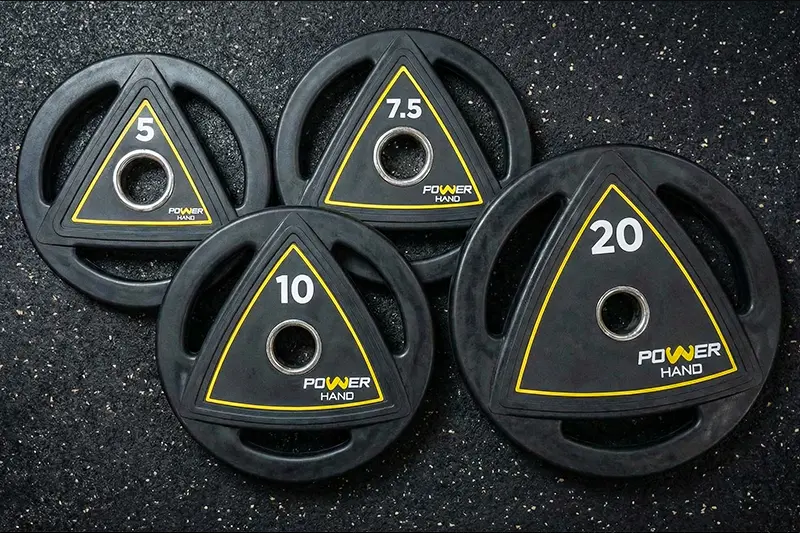
Every production batch undergoes dimensional inspection. For weight plates, this means verifying the centre bore diameter (50.4 mm for Olympic plates), outer diameter, thickness, and weight. Commercial-grade products must maintain tolerances of ±2–3 % of stated weight — a 20 kg plate weighing between 19.4 kg and 20.6 kg passes; anything outside this range is rejected.
Calibrated scales and measuring instruments are used throughout the process. We test samples from the beginning, middle, and end of each production run to ensure consistency across the entire batch, not just the first few pieces off the line.
Drop Testing for Bumper Plates
Bumper plates are designed to be dropped from height — so we test them by dropping them. Our drop test protocol subjects plates to repeated drops from 1.8 metres onto a concrete surface. We measure and record the plate's weight, diameter, and structural condition after 1,000, 5,000, and 10,000 drops. A plate that maintains its weight within tolerance, shows no delamination between the rubber and cast iron core, and exhibits no cracking or permanent deformation passes the test.
This testing reveals the real-world durability that specifications alone cannot capture. Two bumper plates with identical specifications on paper can perform very differently under repeated impact — the difference lies in rubber formulation, bonding quality, and core machining precision, all of which our drop testing validates.
Coating Adhesion Testing
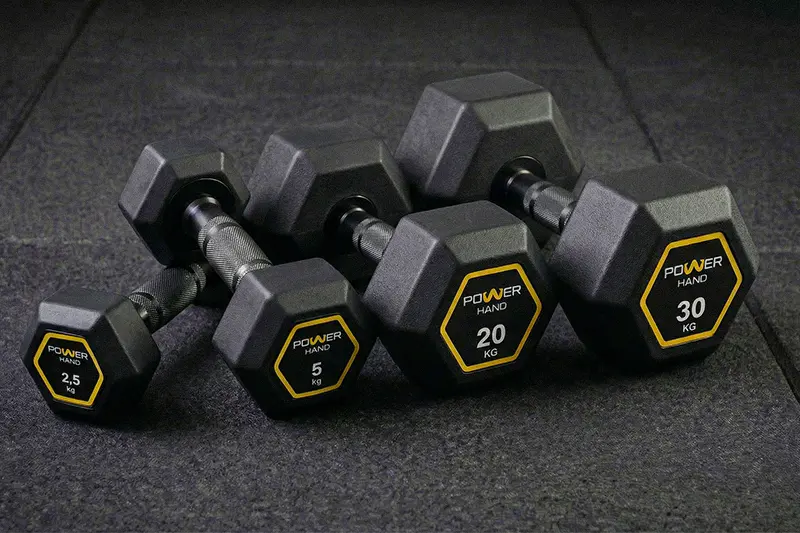
For rubber-coated products — hex dumbbells, encased Olympic plates, and rubber-coated weight plates — the bond between the rubber coating and the cast iron core is critical. We test adhesion using cross-cut tests and pull-off tests that measure the force required to separate the rubber from the iron. Compression-moulded products consistently outperform adhesive-bonded products in these tests, which is why we use compression moulding as our primary bonding method.
We also subject coated products to thermal cycling — alternating between high and low temperatures — to simulate the expansion and contraction that occurs in real-world environments. Equipment stored in unheated warehouses during winter and used in air-conditioned gyms during summer experiences significant thermal stress over its lifetime.
Olympic Bar Flex and Load Testing
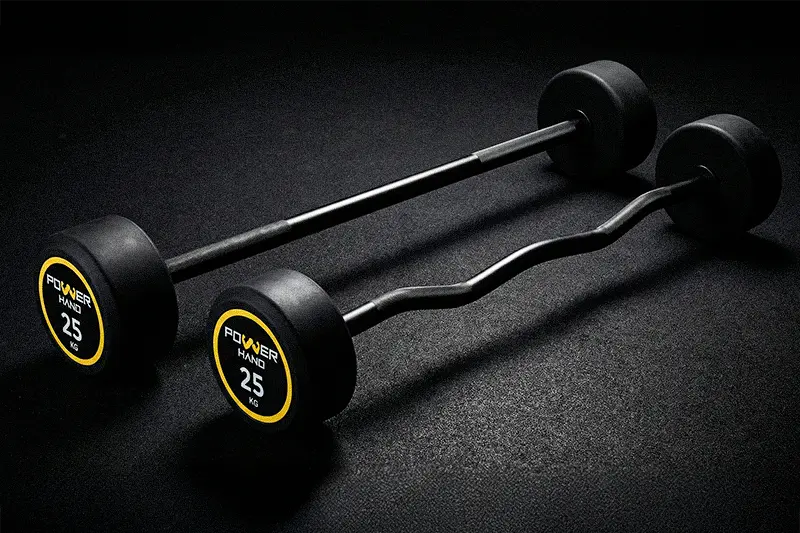
Olympic bars undergo static and dynamic load testing. Static tests apply a fixed load to the centre of the bar and measure deflection. The bar must return to straight after the load is removed — permanent bending indicates insufficient steel quality or incorrect heat treatment. Dynamic testing simulates the repeated loading and unloading that occurs during actual use, measuring fatigue resistance over thousands of cycles.
Sleeve rotation, knurling depth and consistency, and collar fit are also inspected. The sleeves must spin freely under load for proper Olympic lifting technique, while the knurling must provide consistent grip without being so aggressive that it damages hands.
Visual and Cosmetic Inspection
Every finished product receives a visual inspection for surface defects, coating uniformity, weight marking legibility, and overall appearance. For private-label products, this includes verifying that the customer's logo and branding are correctly positioned, properly moulded, and clearly visible. Products that pass functional testing but fail cosmetic standards are reworked or rejected — appearance matters in a commercial gym environment.
Documentation and Traceability
Each production batch is documented with inspection records linking raw material certificates to finished product test results. This traceability means that if an issue is ever identified in the field, we can trace it back to the specific production batch, raw material lot, and manufacturing date. This level of documentation is standard practice for responsible manufacturers and should be expected by every buyer.
Conclusion
Testing is not a marketing claim — it is the process that separates equipment you can trust from equipment that will let you down. When evaluating a manufacturer, ask about their testing protocols, request sample test reports, and if possible, visit the factory to see testing in action. At Anka Force Sport, we welcome this scrutiny because it demonstrates the quality standards we have maintained since 2002. Contact us for detailed test data on any product in our range.