The Great Dumbbell Debate
When equipping a commercial gym, one of the first decisions you'll face is the dumbbell finish: rubber-coated or chrome? Both have their place, but for most commercial environments, one clearly outperforms the other. Let's break it down.
Rubber-Coated Dumbbells
How They're Made
A rubber-coated dumbbell starts with a cast iron core — the same dense, balanced material used in all quality free weights. The core is then encased in a layer of vulcanized rubber. At Anka Force Sport, both the cast iron and the rubber coating are manufactured from recycled materials, making these an environmentally responsible choice.
Advantages
- Floor protection: The rubber shell absorbs impact, protecting both the dumbbell and your gym floor from damage
- Noise reduction: Significantly quieter when set down or accidentally dropped — a major benefit in commercial settings where noise control matters
- Durability: The rubber coating protects the cast iron from scratches, chips, and corrosion
- Comfort: Rubber provides a slightly softer contact point, reducing bruising during exercises where the dumbbell rests on the body
- Aesthetics: Rubber dumbbells maintain a clean, professional appearance over time
Considerations
- New rubber dumbbells may have a slight odour initially — this dissipates within a few weeks
- In extremely hot environments (outdoor gyms in direct sunlight), rubber can soften slightly
- Rubber can degrade over many years of UV exposure if used outdoors
Chrome Dumbbells
How They're Made
Chrome dumbbells feature the same cast iron core, but with a polished chrome plating instead of rubber. The chrome finish gives a sleek, reflective appearance.
Advantages
- Classic appearance: The mirror-finish chrome look is undeniably attractive
- Easy to clean: Smooth chrome surface wipes down quickly
- Compact: Without the rubber layer, chrome dumbbells are slightly more compact at the same weight
- No odour: No rubber smell to deal with
Considerations
- Chrome chips and flakes over time, especially with heavy commercial use
- Bare metal on gym floors causes damage — scratches, dents, broken tiles
- Significantly louder when dropped or clanked together
- Chrome plating can rust once the surface is compromised
- Harder on the body during contact exercises
The Verdict for Commercial Gyms
For the vast majority of commercial gym environments, rubber-coated dumbbells are the better choice. The floor protection alone justifies the selection — replacing damaged flooring is far more expensive than the incremental difference between rubber and chrome. Add in noise reduction, durability, and member comfort, and the case is clear.
Chrome dumbbells have their place in boutique settings where aesthetics are paramount and the weight range stays lighter (think: a luxury hotel spa gym with dumbbells up to 15 kg).
What About Hex vs Round Shape?
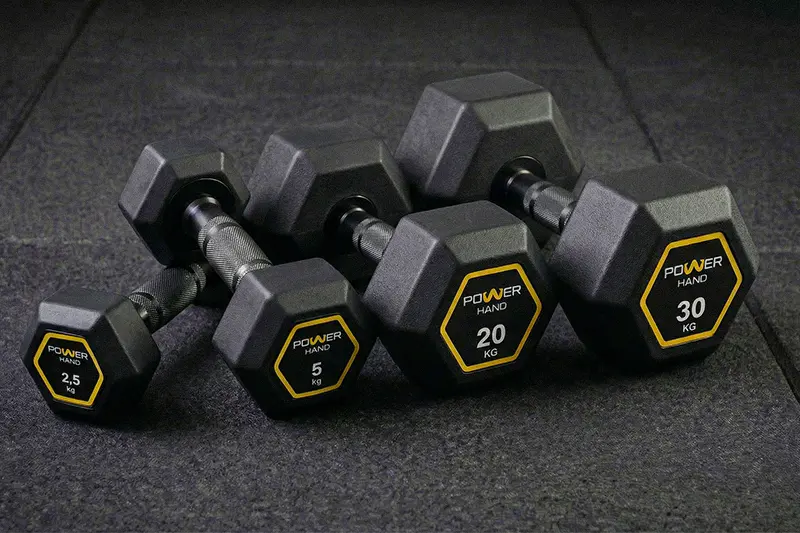
This is a separate but related decision. Hex (hexagonal) dumbbells don't roll when placed on the floor, which is a safety advantage in busy gyms. Round dumbbells offer a more traditional look. Both shapes are available in rubber-coated and chrome finishes. For a deeper comparison, see our guide on hex vs round dumbbells.
Choosing the Right Partner
Quality varies widely between manufacturers. Key things to look for:
- Core material: Cast iron is the standard for commercial dumbbells — avoid cheaper alternatives that use sand or cement filling
- Rubber quality: Recycled rubber performs well and is more sustainable
- Weight accuracy: ±2–3% tolerance is standard for commercial-grade equipment
- Handle knurling: Good knurling prevents slipping without tearing skin
Anka Force Sport manufactures both rubber-coated and chrome dumbbells with recycled cast iron cores. No minimum order — from a single rack set to a full gym loadout. Contact us for samples and specifications.