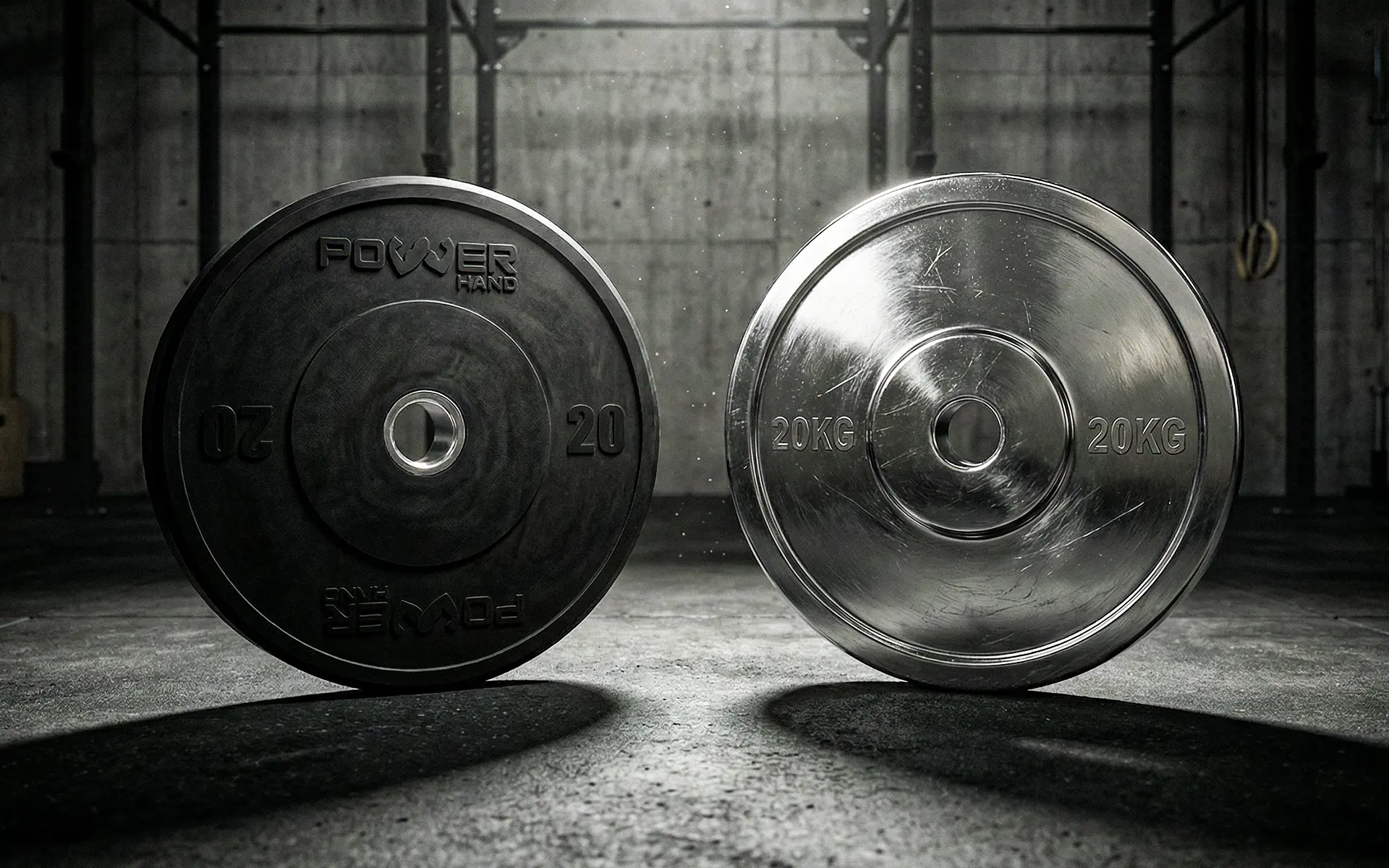
Understanding the Two Main Types of Weight Plates
Step into any well-equipped gym, and you’ll find two main types of weight plates: bumper plates made of dense rubber and steel (or cast iron) plates. Both serve the same basic purpose: loading resistance onto a barbell. However, they differ significantly in material, behavior, cost, and ideal usage.
Choosing between them is not just a matter of preference. The right choice depends on your training style, facility needs, budget, and even your neighbors’ noise tolerance. Let’s break down each factor.
What Are Bumper Plates?
Bumper plates are made of dense rubber and are designed to protect the floor, bar, and the plate itself from damage when dropped from height. They were originally developed for Olympic weightlifting, where snatch and clean & jerk movements require the loaded barbell to be dropped from full extension.
Key Features
Uniform diameter: All bumper plates from 10 kg to 25 kg share a 450 mm (17.7 in) diameter. This ensures the bar stays at a consistent height regardless of the weight loaded.
Rubber construction: High-density original or recycled rubber provides necessary bounce and shock absorption for safe dropping.
Color coding: Competition bumper plates follow IWF color standards: red (25 kg), blue (20 kg), yellow (15 kg), green (10 kg).
Thickness difference: Lighter bumper plates are significantly thicker than equivalent steel plates; this limits how much weight can fit on a standard Olympic bar.
What Are Steel Plates?
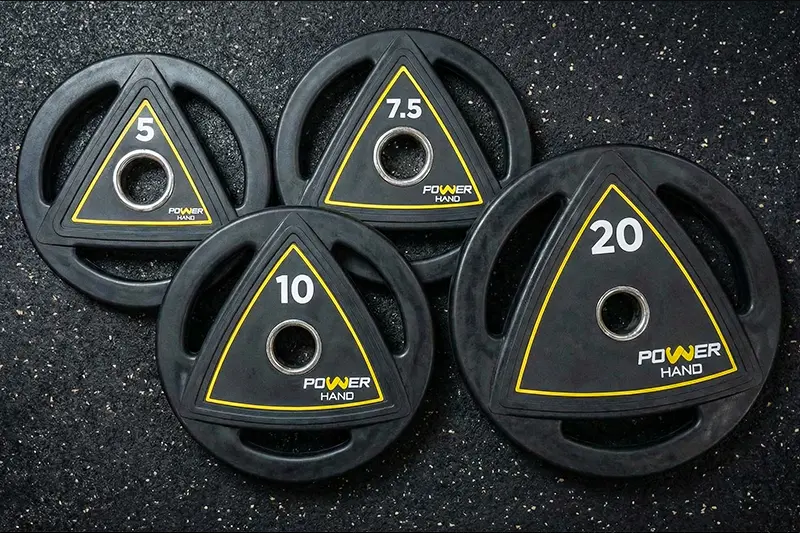
Steel plates (also called iron or metal plates) are traditional weight plates made from cast iron, processed steel, or steel with rubber/chrome coating. They have been standard in gyms for over a century.
Key Features
Variable diameter: Lighter plates are smaller in diameter than heavier ones. A 5 kg steel plate is noticeably smaller than a 20 kg plate.
High density: Steel is denser than rubber; therefore, steel plates are thinner at the same weight, allowing more total weight to be loaded onto the bar.
Durability: Steel plates are nearly indestructible under normal use. They do not crack, chip, or degrade over time.
Not safe for dropping: Dropping steel plates from height can crack concrete floors, damage bars, and create dangerous bounce.
Direct Comparison
| Factor | Bumper Plates | Steel Plates |
|---|---|---|
| Material | Dense rubber (original or recycled) | Cast iron or processed steel |
| Drop Safety | Designed for dropping | Not safe for dropping |
| Noise Level | Low to moderate bounce | Very loud metallic noise |
| Diameter | Uniform 450 mm for all weights | Varies by weight |
| Thickness | Thicker (less weight per bar) | Thinner (more weight per bar) |
| Max Load per Bar | Typically ~180–220 kg | ~300–400+ kg possible |
| Floor Protection | Excellent | Poor (without platform) |
| Cost per Kg | –5.00 | –3.00 |
| Lifespan | 5–15 years (depending on use) | 20+ years |
When to Choose Bumper Plates
Olympic Weightlifting:
If your gym supports Olympic lifting, you need bumper plates. Movements like snatch, clean & jerk, and their variations require athletes to drop loaded bars from overhead. Using steel plates for these movements damages floors and creates unsafe conditions.
CrossFit and Functional Training:
CrossFit often involves movements that include intentional dropping: thrusters, power cleans, overhead squats. Bumper plates are the standard choice.
Noise-Sensitive Environments:
Home gyms, hotels, and shared spaces benefit from bumper plates. The rubber construction significantly reduces impact noise.
Beginner Training:
Bumper plates are more forgiving, reducing risk when control is lost.
When to Choose Steel Plates
Powerlifting:
Calibrated steel plates are used in powerlifting competitions. Their thinner profile allows more weight to be loaded on the bar.
Bodybuilding and General Strength Training:
Ideal for machine exercises and classic strength workouts.
Budget-Conscious Facilities:
Steel plates are generally 30–50% more economical and last longer.
Best Approach: Hybrid Setup
- Olympic platforms: bumper plates
- Squat rack and bench: coated steel plates
- Machines: standard steel plates
Recycled Rubber Advantage
Modern bumper plate production often uses recycled rubber, reducing environmental impact and cost.
Ankaforce uses recycled rubber components that meet commercial durability standards and support sustainable production. These materials are carefully processed to ensure consistent density and quality.
Maintenance Recommendations for Both Types
Bumper plates:
Clean monthly, store flat, and keep out of sunlight. Check steel rings for wear.
Steel plates:
Keep dry, prevent rust, and inspect surfaces regularly.
Making Your Decision
Choosing between bumper plates and steel plates depends entirely on your intended use.
- If you frequently drop the bar: choose bumper plates.
- If maximum weight and durability matter: steel plates are better.
- For most gyms, the best solution is to use both types together.