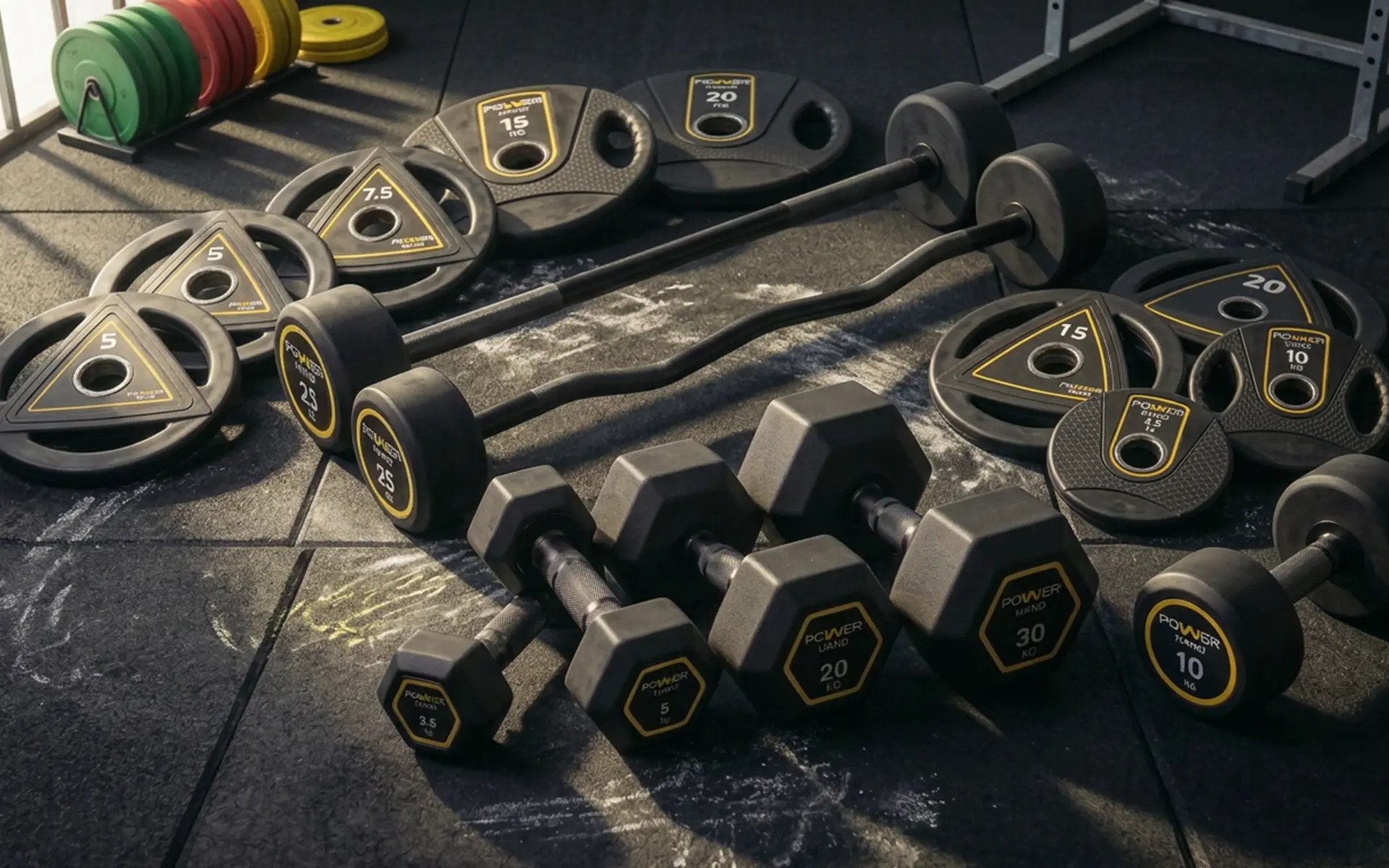
If you're sourcing dumbbells for a commercial gym, hotel fitness room, or CrossFit-style box, the choice between hex (hexagonal) and round dumbbell heads is one of the few specification decisions that genuinely affects how long the equipment lasts. We get this question almost weekly from buyers, so this article walks through the durability difference based on what we see in production, what we hear from gym operators after 12, 24, and 36 months of use, and what the actual failure modes look like.
The short answer
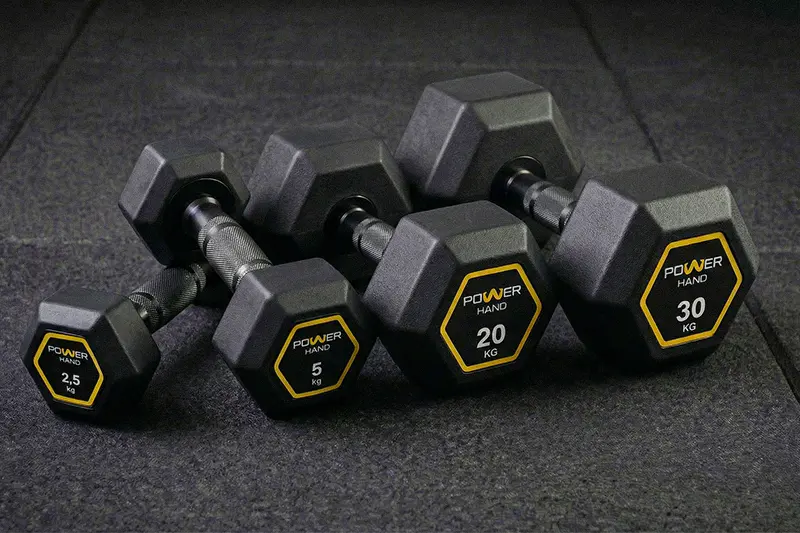
For high-frequency commercial use with regular floor drops, well-made hex rubber-coated dumbbells outlast round dumbbells — usually by a meaningful margin. The hex shape distributes drop impact across a flat face instead of a small arc of curve, the rubber coating protects the cast-iron core, and the anti-roll geometry prevents off-axis stress on storage racks.
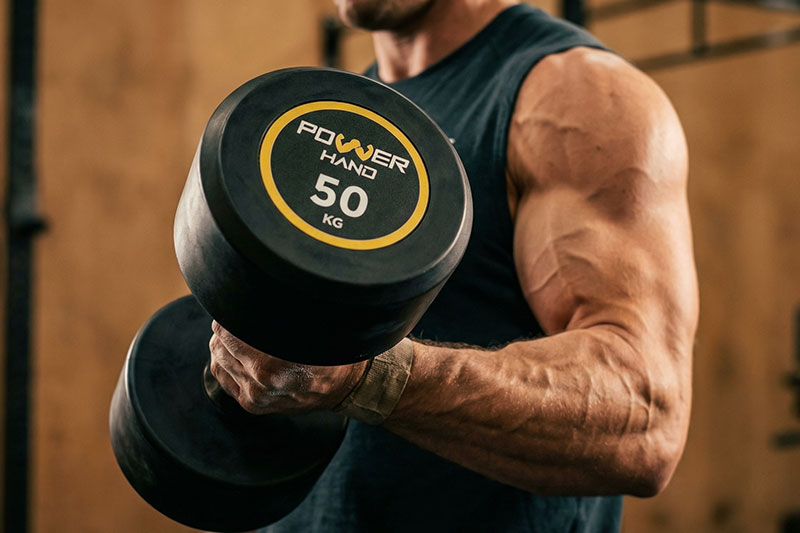
Round dumbbells — especially urethane-coated or chrome-finished — look more premium and rotate cleanly under hand grip rotations, but they show wear faster in any environment where they're dropped repeatedly onto a non-padded surface.
What actually fails first on a dumbbell
From production-floor and warranty data, dumbbell failure under commercial use comes from a small list of causes:
- Coating tear or chunking — the rubber or urethane skin tears at the corner, exposing the iron core. After this point, every subsequent drop accelerates the damage.
- Handle weld failure — the bar attaches to the head via a press-fit or weld. Off-axis impact (dropping at an angle) puts shear load on this joint.
- Knurling wear — on the handle. Less of a structural issue, more a comfort issue.
- Roll-off-rack damage — round dumbbells stored on a flat shelf can roll, fall, and chip on the corner.
Why hex geometry helps
A hex dumbbell drops onto one of six flat faces. The impact spreads across the full flat surface area, not a thin tangent arc. Two consequences:
- Lower peak stress on coating: the rubber doesn't have to absorb a high-pressure point load — it absorbs a distributed face load.
- No roll-off energy: the dumbbell stops where it lands. There's no rolling impact transferring momentum into the next dumbbell on the floor or off the rack edge.
In a CrossFit-style box where dumbbells are dropped 50–100 times per session per pair, this geometric difference compounds quickly.
Material choices and how they interact with shape
| Combination | Drop durability | Noise on drop | Best fit |
|---|---|---|---|
| Hex + rubber-coated | Highest | Quiet | Commercial gym, CrossFit, hotel |
| Round + rubber-coated | Medium-high | Quiet | Commercial gym (light drops only) |
| Round + urethane | Medium | Medium | Premium hotel, residential |
| Round + chrome / steel | Lowest under drops | Loud | Calisthenics studio, no-drop environment |
| Hex + raw cast iron (no coating) | Floor-damaging | Loud | Garage / DIY only |
What we see at 12 / 24 / 36 months in commercial use
Customers who run high-traffic commercial floors give us informal feedback after the first year, second year, and third year. The pattern:
- 12 months: rubber-coated hex dumbbells show light scuffing on the corner edges of the hex faces, but no coating tear. Round rubber dumbbells show similar light scuffing distributed around the circumference. No structural issues on either.
- 24 months: hex coating still intact in 95%+ of pairs. Round dumbbells in heavy-drop environments show a 5–10% rate of coating starting to chunk on the corner radius where drop pressure concentrated.
- 36 months: hex pairs are typically still serviceable with cosmetic wear; round dumbbells in CrossFit-style use are starting to show iron exposure on a meaningful share of the rack.
This is anecdotal commercial-floor experience, not laboratory testing. But the same pattern shows up consistently across gym chains, hotels, and residential towers.
When round dumbbells make sense
Round-head dumbbells aren't worse — they're optimized for a different environment:
- Boutique studios with no drops: personal-training rooms, yoga/Pilates studios, where the dumbbell is racked between sets and not slammed.
- Premium hotel gyms: aesthetic match to the property's design language; urethane coating reads as more high-end than rubber.
- Olympic-style competition lifting: not relevant to mass-market dumbbells, but for training-bench style work, round-head allows cleaner rotation under the wrist on the press.
What about the handle?
The dumbbell head shape doesn't change the handle. What you should specify on the handle:
- Knurling depth: medium-depth for commercial use. Aggressive knurling tears callus skin in high-rep environments; smooth knurling slips with sweat.
- Handle diameter: 28–30 mm is standard for commercial dumbbells. Specialty thicker grips (35 mm+) are a separate product.
- Knurl gap in the center: a smooth section in the middle so the dumbbell doesn't dig into the chest on bench-press lockout.
How we manufacture for drop durability
For our hex rubber-coated dumbbell line:
- Cast-iron core (not steel) — better elastic deformation under drop impact
- Recycled-rubber outer skin, vulcanized to the iron core (not glued)
- Press-fit handle into a counterbore on the iron core, not a surface weld
- Tolerance: ±2–3% on weight, commercial-grade (not competition-calibrated)
Vulcanization is the key step. A glued rubber skin will start to peel after enough drops — the bond at the molecular level isn't there. A vulcanized skin is bonded by heat-and-pressure to the iron, and stays in place through years of impact.
What to ask your supplier
Three questions a buyer should ask before committing:
- "Is the rubber coating vulcanized or glued?" — if the answer is unclear, the answer is glued. Vulcanization is a process worth being specific about.
- "What's the core material?" — cast iron (better drop absorption) vs solid steel (cheaper, harsher impact transfer).
- "What does the warranty cover for coating tear?" — commercial-grade dumbbells should carry at least a 12-month coating warranty.
Bottom line
For 90% of commercial buyers — commercial gyms, CrossFit boxes, hotel chains, residential towers — hex rubber-coated is the durability choice. Round dumbbells are the right choice for low-drop, aesthetic-driven, or specialty-rotation environments. Match the shape to the floor it's going to live on.
Browse our hex commercial dumbbell range from 1 kg to 50 kg pairs on the product page, or request a project-specific quote — we ship to Europe in 3–7 days and to the UAE in 6–9 days.