Turkey's Rise as a Fitness Manufacturing Hub
Over the past two decades, Turkey has quietly built a formidable fitness equipment manufacturing sector. What began as a handful of foundries and metalworking shops producing basic weights has grown into a sophisticated industry capable of delivering complete gym outfitting solutions to markets across Europe, the Middle East, Africa, and Central Asia. This growth reflects broader trends in Turkish manufacturing while being driven by factors specific to the fitness industry.
The Industrial Foundation
Turkey's fitness manufacturing sector benefits from the country's deep industrial heritage. Regions like Tekirdağ and the broader Marmara industrial corridor provide access to established foundries, rubber processing facilities, powder coating lines, and precision machining workshops. This ecosystem means that a fitness equipment manufacturer can source cast iron castings, recycled rubber compounds, chrome plating, and packaging materials all within a short logistics radius.
Anka Force Sport's facility in Tekirdağ exemplifies this advantage. Located within reach of raw material suppliers, port facilities, and overland transport networks, the factory can move from raw cast iron to finished, packaged product with minimal supply chain complexity.
Export Growth and Market Access
Turkish fitness equipment exports have grown significantly year on year, driven by several factors. Geographic proximity to the European Union provides fast delivery times — often under a week by road to most EU destinations. Turkey's customs union agreement with the EU simplifies cross-border trade with reduced tariffs and streamlined documentation. For Middle Eastern and North African markets, Turkey is even closer, with road freight reaching most capitals within days.
This geographic advantage becomes particularly compelling when compared to the alternative of sourcing from East Asia. Sea freight from China takes four to six weeks, ties up capital in transit inventory, and carries higher risk of damage during extended ocean voyages. Turkish manufacturers offer a middle path: competitive production costs with dramatically shorter lead times and lower logistics risk.
Quality and Capability Evolution
The early perception of Turkish fitness equipment as basic, low-cost product has been thoroughly overturned. Modern Turkish manufacturers invest in CNC machining, automated powder coating systems, and rigorous quality control programmes. Many facilities hold ISO certifications and produce equipment that meets or exceeds European safety standards.
Cast iron production in Turkey has advanced particularly rapidly. Electric induction furnaces fed with carefully sorted recycled scrap produce castings with tight compositional control. Weight tolerances of ±2–3 % — the benchmark for commercial-grade fitness equipment — are achieved routinely. Recycled rubber compounding has similarly matured, producing coatings that match virgin rubber in durability and finish quality.
Flexibility as a Competitive Advantage
Turkish manufacturers have distinguished themselves through flexibility that larger factories in other regions cannot easily match. Many offer no minimum order quantity, partial-pallet shipping, and willingness to produce custom-branded equipment for small and medium enterprises. This flexibility makes Turkish suppliers particularly attractive to startup gym chains, boutique fitness concepts, and distributors building diverse product catalogues.
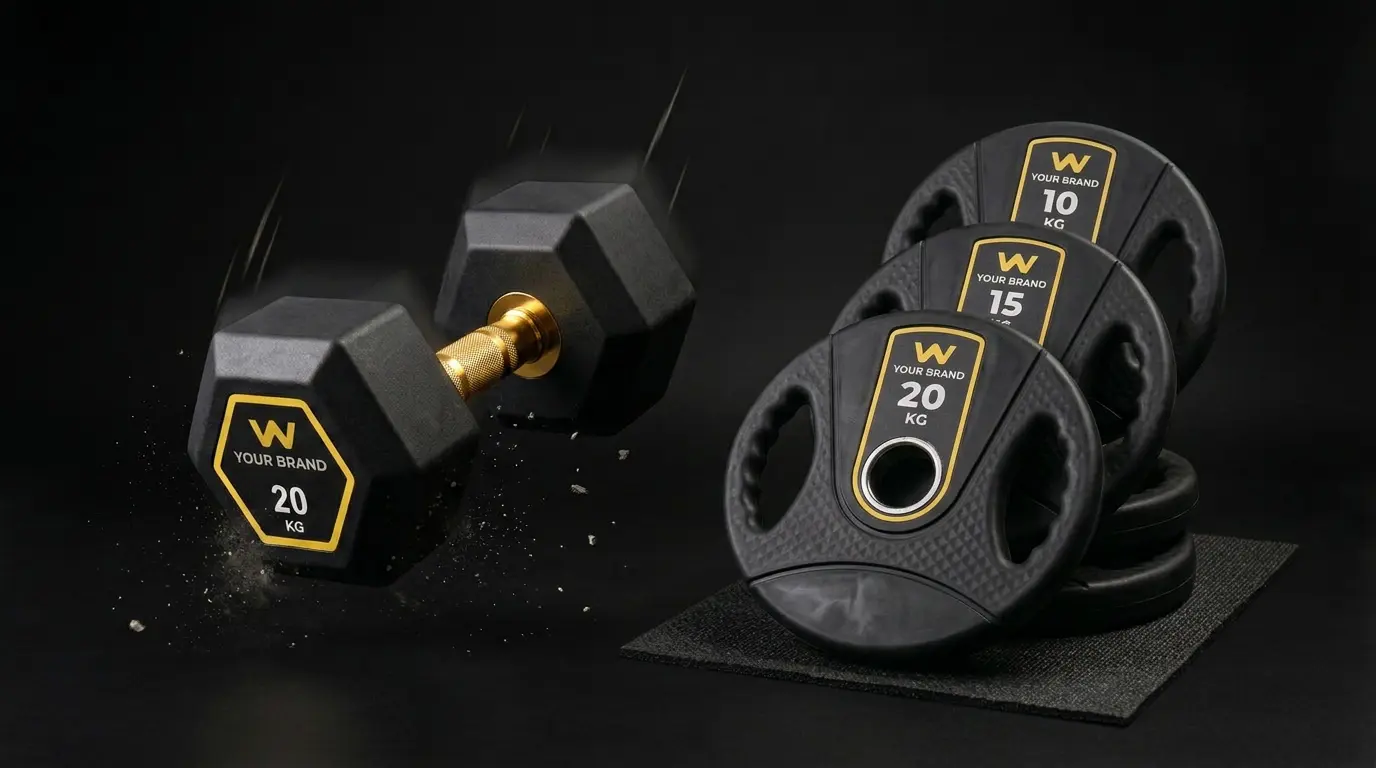
Private-label and OEM production is a core capability. Manufacturers embed customer logos directly into casting moulds and rubber compound tooling, producing branded equipment that is indistinguishable from proprietary designs. Fast EU delivery and the ability to handle small custom runs give Turkish manufacturers an edge in responsiveness.
Sustainability Leadership
Turkish fitness manufacturers have increasingly embraced sustainability as both an environmental responsibility and a market differentiator. The use of recycled cast iron and recycled rubber as primary materials reduces resource consumption and appeals to environmentally conscious buyers in European markets where sustainability credentials influence purchasing decisions.
Conclusion
Turkey's fitness manufacturing sector has matured from a regional supplier into a globally competitive force. The combination of industrial capability, geographic advantage, production flexibility, and growing sustainability focus positions Turkish manufacturers as compelling partners for gym owners, distributors, and brands worldwide. Anka Force Sport is proud to be part of this growth story, delivering commercial-grade equipment from Tekirdağ to facilities around the world.