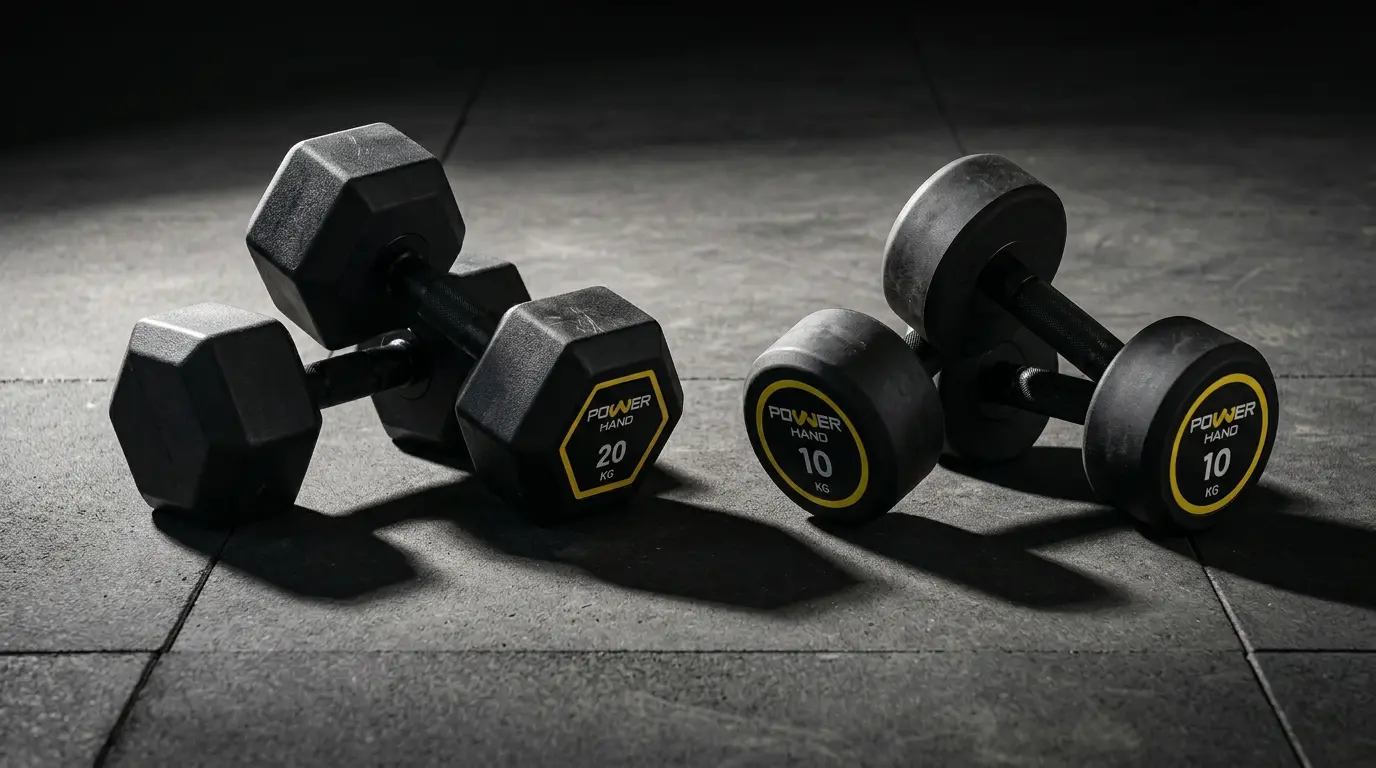
Shape Matters More Than You Think
Dumbbells come in two fundamental shapes: hexagonal (hex) and round. At first glance, this seems like a minor design choice. In practice, the shape affects safety, functionality, storage, and even which exercises you can perform effectively. Here's everything you need to know to make the right choice for your facility.
Hex Dumbbells
The Anti-Roll Advantage
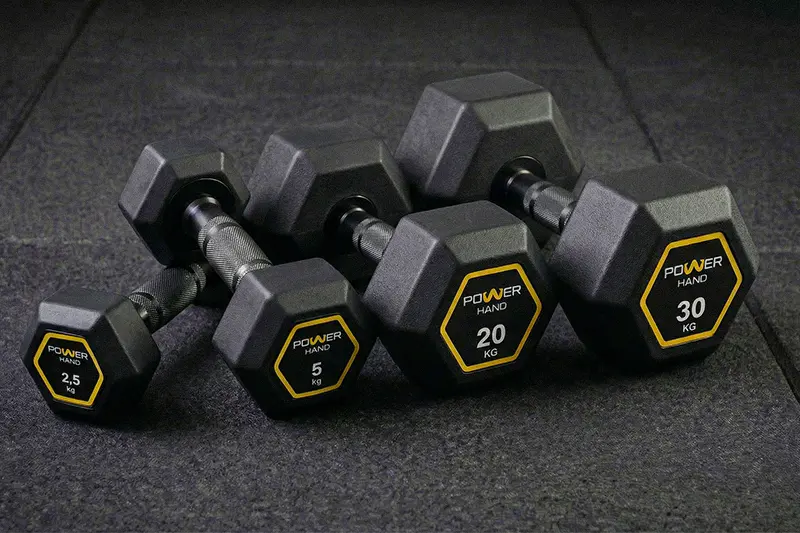
The defining feature of hex dumbbells is that they don't roll. Place them on the floor and they stay put. In a commercial gym with dozens of members training simultaneously, this is a significant safety benefit. A rolling dumbbell is a trip hazard, a property damage risk, and a liability concern.
Floor Exercise Stability
Hex dumbbells provide a stable platform for floor exercises like renegade rows, dumbbell push-ups, and planks. The flat sides create a solid base that doesn't wobble, allowing you to load weight through the handles with confidence.
Storage
Hex dumbbells sit neatly on flat racks and don't roll off. They can even be stacked on the floor in organized rows without dedicated racks — useful for temporary setups or overflow storage.
Considerations
- Slightly bulkier than round dumbbells at the same weight due to the hexagonal shape
- The flat edges can feel less smooth during certain rotation movements
- More contact points on the thigh when setting up for exercises like dumbbell bench press
Round Dumbbells
Classic Design, Smooth Feel
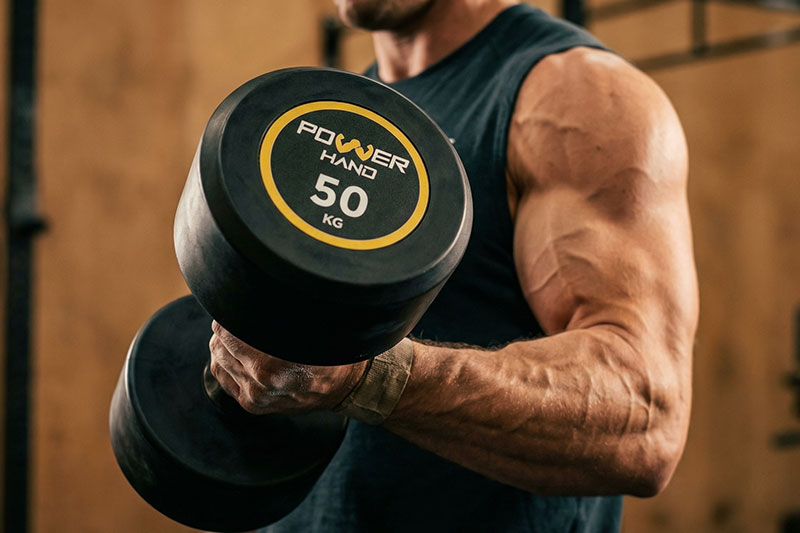
Round dumbbells have a traditional, streamlined shape. They roll — which is both their charm and their limitation. The smooth contour feels natural in the hand and transitions smoothly during exercises that involve rotation.
Compact Profile
Without the hex geometry, round dumbbells can be slightly more compact at the same weight. This matters at the heavier end of the range, where every centimetre of head size affects comfort and exercise mechanics.
Aesthetics
Many premium and boutique gym environments prefer round dumbbells for their classic look. Paired with a quality chrome or rubber finish, they make a visual statement.
Considerations
- Rolling is a genuine safety concern in busy environments
- Require cradle-style racks to prevent rolling off shelves
- Unstable for floor-based exercises (push-ups, renegade rows)
- Can roll under equipment and become a hazard
Head-to-Head Comparison
Safety
Winner: Hex. The anti-roll design is a clear safety advantage in any commercial setting.
Exercise Versatility
Winner: Hex. Hex dumbbells do everything round dumbbells do, plus they enable stable floor exercises.
Storage Flexibility
Winner: Hex. Compatible with flat racks, cradle racks, and floor storage. Round dumbbells need cradle racks.
Compact Size
Winner: Round. Slightly more compact at heavier weights.
Aesthetics
Tie. This is subjective. Hex looks industrial and modern; round looks classic and refined.
What We Recommend
For commercial gyms, CrossFit boxes, hotel gyms, and any facility where safety and versatility are priorities, hex dumbbells are the better choice. The anti-roll feature alone justifies the selection for any environment where equipment is used by multiple people.
Round dumbbells work well in controlled environments — personal training studios, boutique facilities, and settings where aesthetics are paramount and the risk of equipment rolling is managed through strict protocols.
Both Shapes, Same Quality Core
At Anka Force Sport, both hex and round dumbbells share the same construction fundamentals: recycled cast iron cores and recycled rubber coatings, manufactured in our factory in Tekirdağ since 2002. The quality, weight accuracy (±2–3% tolerance), and durability are identical regardless of shape.
We also manufacture dumbbell racks designed to accommodate both hex and round configurations. View our complete dumbbell and rack range.
Need help choosing? Contact our team — we'll recommend the right shape based on your gym type, member profile, and space constraints.