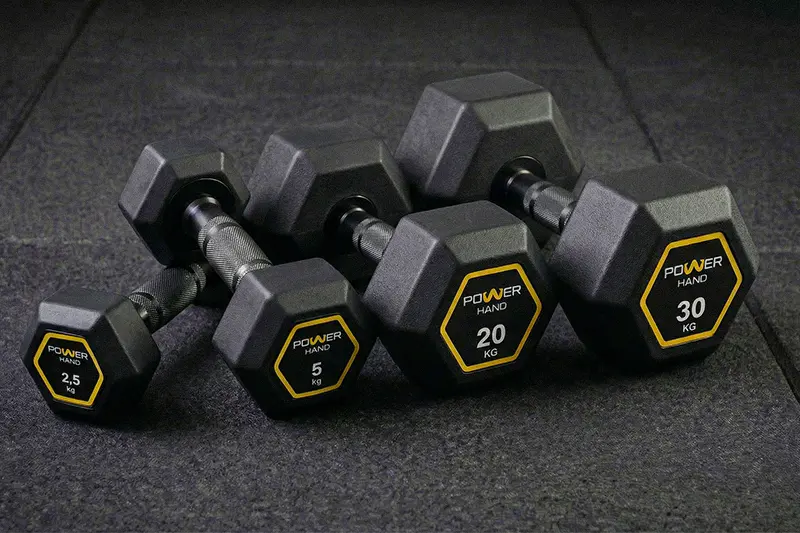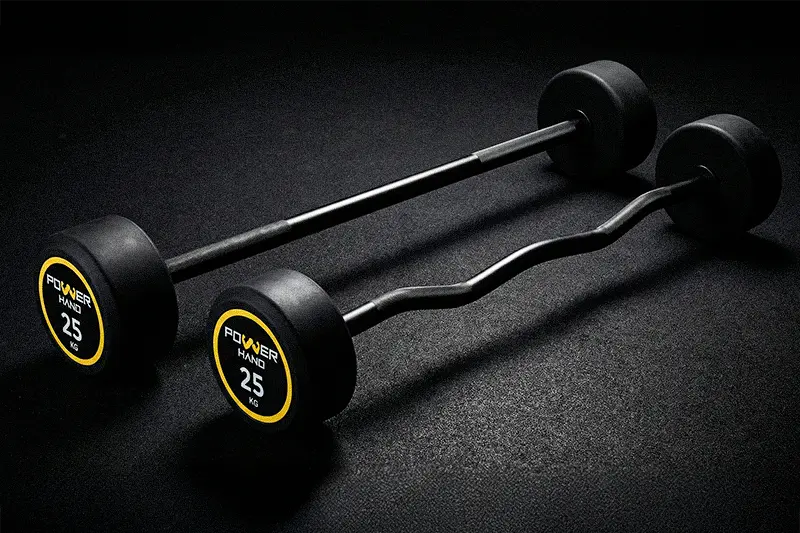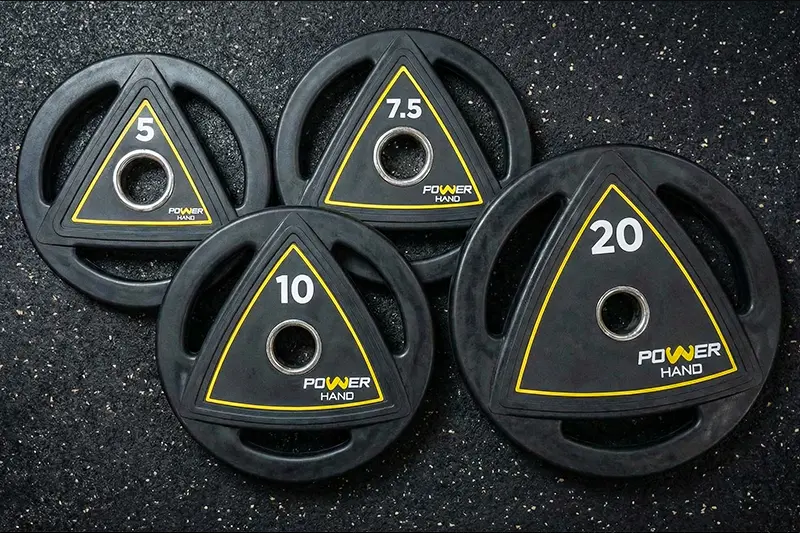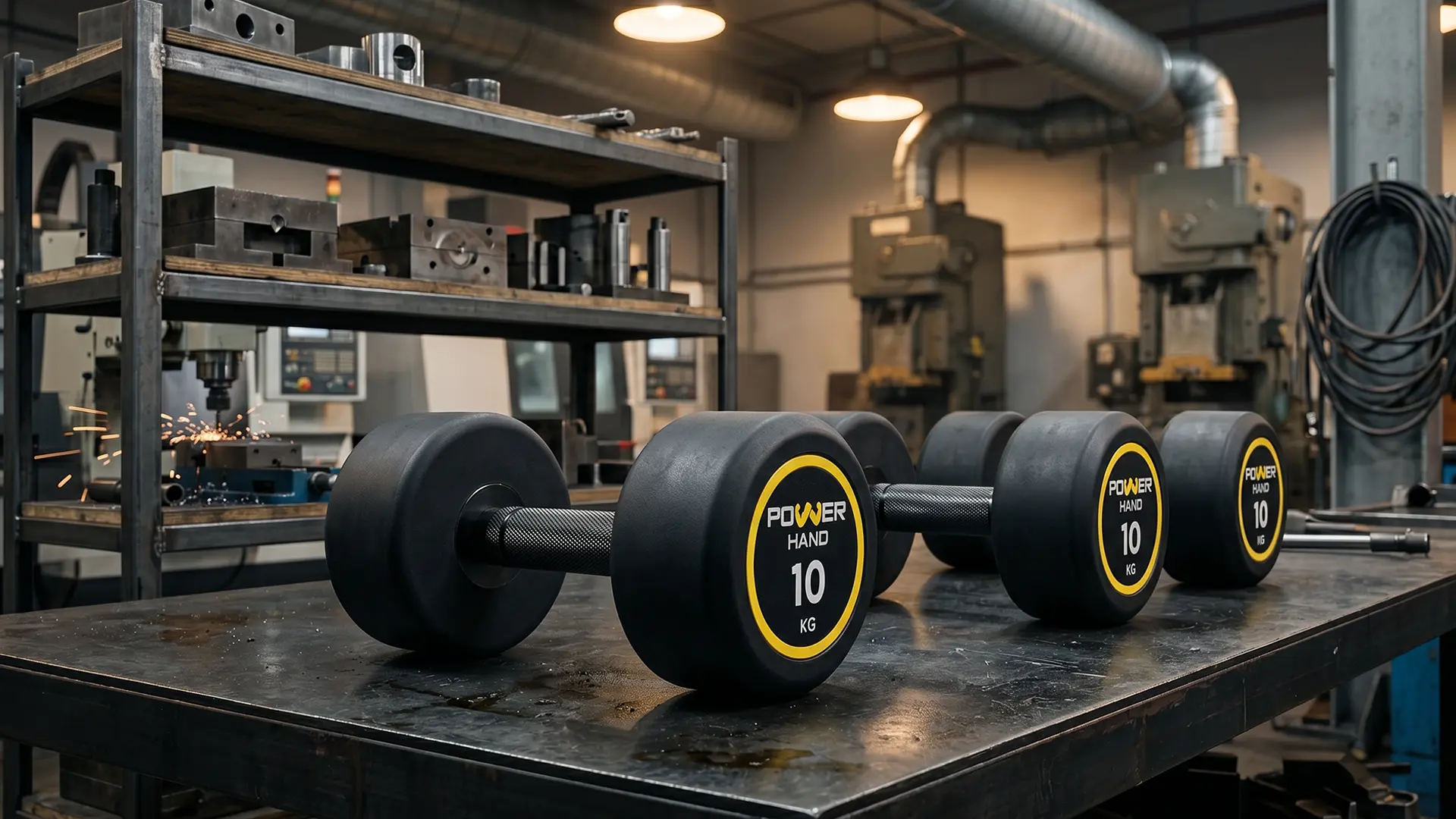
OEM — original equipment manufacturing — means you design the product (or pick from a factory's existing shapes), the factory produces it with your branding, and you sell it under your label. For fitness brands, OEM is how a small team competes with established names without setting up a factory.
Here's the process, from cold email to first production run, with the numbers you need to plan.
Step 1: Product spec sheet (week 1)
Before contacting a factory, write a one-pager per SKU covering: weight range, dimensions, color, material (rubber-coated cast iron vs polyurethane vs urethane), tolerance spec, handle style, packaging preference, target retail price. The clearer this is, the faster you'll get a real quote.
Step 2: Factory shortlist (weeks 1–2)
Shortlist 3 factories across different regions (e.g., Turkey, China, Eastern Europe). Ask each for sample pricing, MOQ, lead time, and three references from OEM clients. A factory that can't give you references for OEM work has never done it.
Step 3: Samples (weeks 2–4)
Order 1–2 samples per SKU, with a letter-sized logo mockup. Yes, the samples cost money — usually full retail price plus freight. That cost is typically credited against your first production order. Do not skip this step. Samples tell you whether the factory can actually hit your spec or is promising above its capability.
Step 4: First production order (weeks 4–12 depending on factory)
Typical first production OEM order: 150–500 units per SKU for small brands, 1,000–5,000 for mid-market, 10,000+ for large. The factory's sweet spot is usually 500–2,000 units. Below that, you're in "pilot run" pricing (premium). Above that, you're getting real volume discounts.
OEM costs: the breakdown
Rough OEM pricing compared to stock-product pricing:
- Stock products, same factory: baseline (100%)
- OEM with custom packaging + logo only: 102–108%
- OEM with custom color + branding: 108–120%
- OEM with custom material / tolerance / shape: 115–140%
The premium shrinks as volume grows. A 10,000-unit custom-color order often runs cheaper per unit than 150 stock units.
Five questions to ask every OEM factory
- What's the smallest batch you've produced for another OEM brand in the last 12 months?
- Can I talk to that brand as a reference?
- What's your color-matching tolerance and how is it measured?
- What happens if 2% of the production run has cosmetic defects?
- Who retains the tooling and mold after the run?
Lead time reality check
For a first OEM production order with custom colors and packaging:
- China: 10–14 weeks (sample cycle + production + sea-freight)
- Turkey: 6–10 weeks (sample cycle + production + road-freight to EU)
- Eastern Europe: 8–12 weeks (sample cycle + production + road-freight)
Where Ankaforce fits
We've been running OEM production for gym brands, retail lines, and distributors since 2008. Our MOQ is lower than most Asian alternatives, our sample cycle runs 2–3 weeks, and we retain tooling at no cost for customers who place recurring runs. If you're prepping an OEM launch for EU or Middle East, get our OEM pricing tiers alongside the full catalog.