More Than Just a Protective Layer
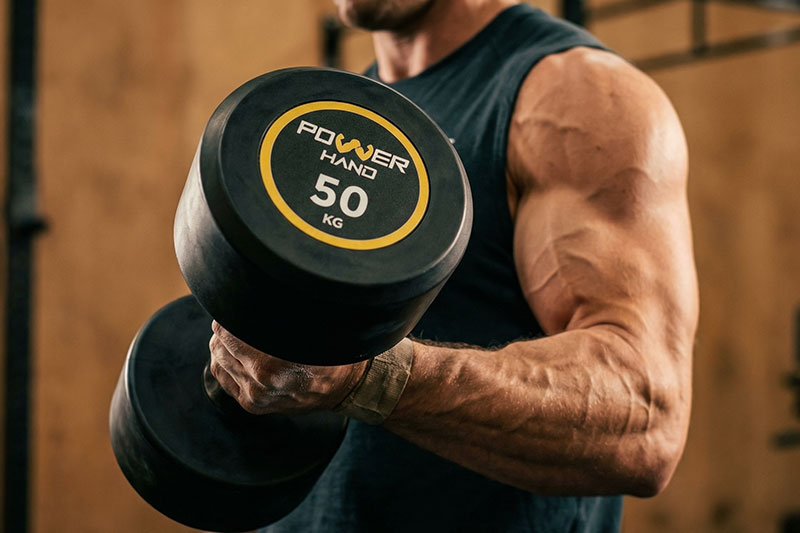
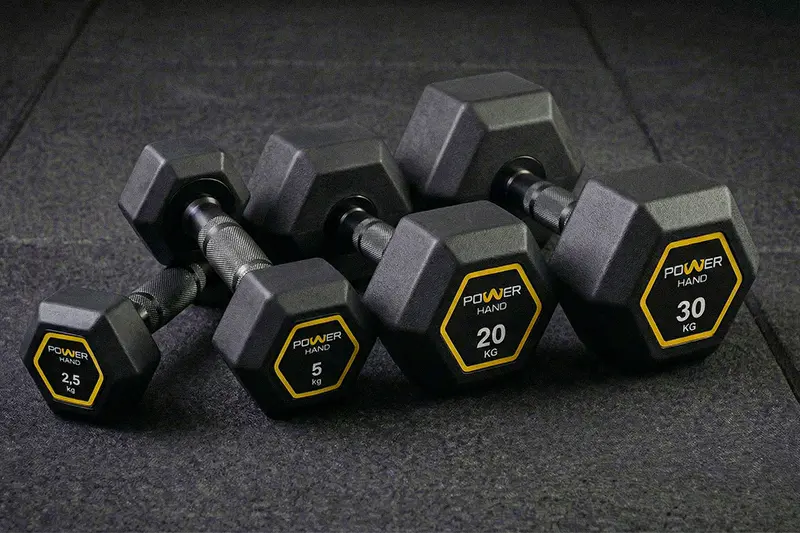
When you pick up a rubber-coated dumbbell or load a rubber-encased Olympic plate onto a bar, you are interacting with an engineered material system that involves chemistry, mechanical bonding, and careful process control. The rubber coating is not merely decorative — it serves critical functions including floor protection, noise reduction, corrosion prevention for the cast iron core, and user comfort. Understanding the science behind this coating helps buyers evaluate quality and make informed purchasing decisions.
Rubber Compound Formulation
Fitness equipment coatings are typically made from either virgin rubber or recycled rubber. Both types are formulated with specific additives to achieve the desired balance of hardness, elasticity, abrasion resistance, and colour. The base polymer — natural rubber, styrene-butadiene rubber, or ethylene-propylene-diene monomer — is combined with fillers, plasticisers, and curing agents in a precise recipe.
Recycled rubber, sourced primarily from end-of-life tyres, undergoes a process called devulcanisation or mechanical grinding that prepares it for reuse. When properly formulated, recycled rubber compounds achieve performance characteristics that meet commercial fitness equipment requirements. At Anka Force Sport, we use recycled rubber processed in our Tekirdağ facility, demonstrating that sustainability and quality are fully compatible.
Bonding Rubber to Cast Iron
The most critical aspect of rubber-coated fitness equipment is the bond between the rubber coating and the cast iron core. A poor bond leads to coating separation, exposed metal edges, and premature product failure. The dominant bonding methods are compression moulding and adhesive bonding, often used in combination.
In compression moulding, raw rubber compound is placed around the cast iron component in a heated mould. Under pressure and elevated temperature, the rubber vulcanises — its polymer chains cross-link to form a thermoset material that cannot be re-melted. Simultaneously, the heat and pressure create a mechanical and chemical bond with the iron surface. Surface preparation of the casting, including grit blasting and primer application, is essential for achieving a durable bond.
Shore Hardness and Its Significance
Shore hardness measures the resistance of the rubber to indentation and is a key specification for fitness equipment coatings. Typical gym equipment uses rubber in the Shore A 60–80 range. Softer rubber provides better shock absorption and noise reduction but wears faster. Harder rubber is more durable and resistant to cuts but transmits more impact energy to floors and produces more noise.
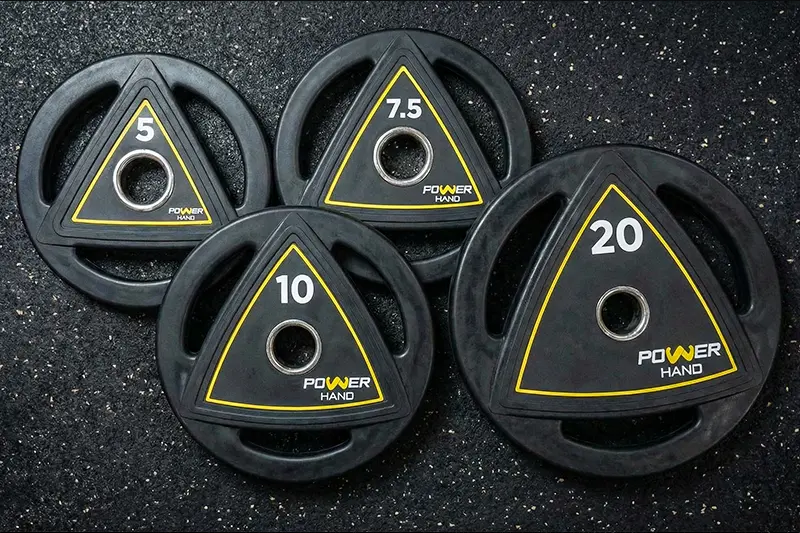
Bumper plates, designed for repeated overhead drops, use a specific hardness range optimised for energy absorption. Olympic plate coatings may be slightly harder for scratch resistance. The formulator balances these properties based on the product's intended use.
Colour and Finish
The distinctive colours of weight plates — the red, blue, yellow, and green of competition standards — are achieved through pigment additions to the rubber compound before moulding. Colour consistency between batches requires tight control of pigment dispersion and curing conditions. The mould surface finish determines the texture of the final product — polished moulds produce glossy surfaces while textured moulds create a matte or grained appearance.
Quality Indicators to Watch
When evaluating rubber-coated fitness equipment, look for several quality indicators. The coating should be uniform in thickness around the entire component with no thin spots or bare areas. There should be no visible separation between rubber and cast iron at the edges. The surface should be free of bubbles, voids, or rough patches. Fresh rubber may have a mild odour that dissipates within a few days; a persistent strong smell suggests incomplete curing or low-quality formulation.
Conclusion
The rubber coating on fitness equipment represents a sophisticated intersection of polymer science, manufacturing process control, and practical engineering. Understanding these fundamentals helps buyers distinguish quality products from inferior ones and appreciate the engineering behind equipment that performs reliably for years. Anka Force Sport's manufacturing process in Tekirdağ applies these principles to every coated product we produce. Contact our team to request samples and technical documentation.