If you're importing dumbbells, bumper plates, or barbells into the EU, your freight cost and lead time depend on three things the sales page won't tell you: incoterms, customs treatment, and partial-pallet availability. Here's what actually matters.
Road freight (TIR) vs sea freight
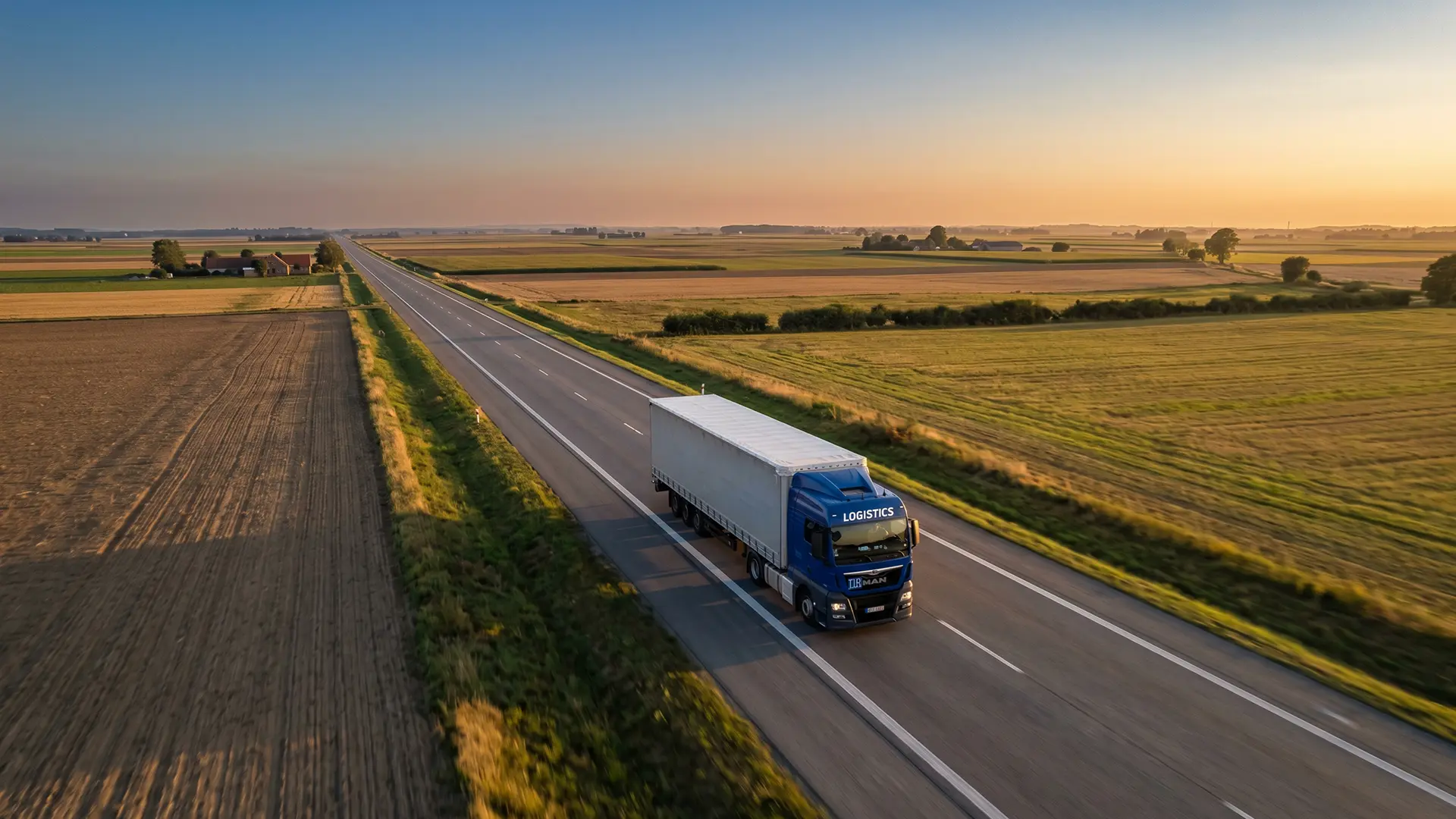
A TIR truck leaving Tekirdağ runs to Germany in 4–6 days, Netherlands in 5–7, Poland in 3–5. A sea-freight container from Turkish ports (Istanbul, Mersin) adds 2–4 weeks versus TIR and costs modestly less per 20 tons. For most B2B gym orders, the speed beats the savings.
The EU customs union advantage
Turkey and the EU operate a customs union on industrial goods since 1996. In plain English: goods of Turkish origin moving to the EU pay no import duty. Your customs clearance is typically a half-day at a border like Kapıkule (TR/BG) or Kapıkule–Svilengrad if you choose rail, not a week at an Asian-origin seaport.
You'll still need:
- ATR certificate (confirms Turkish origin for customs union)
- Commercial invoice
- Packing list
- Bill of lading (CMR for road)
Your supplier prepares these. Your customs broker clears them.
Incoterms that matter
You'll hear these three on every quote:
- EXW (Ex Works): You handle everything from factory gate. Cheapest on paper, most work for you.
- FCA (Free Carrier): Factory loads the truck; freight is yours from there. Common for buyers with freight forwarder relationships.
- CIF (Cost, Insurance, Freight): Supplier quotes delivered to destination port/city with insurance included. Easiest for buyers new to importing.
If you're placing your first 1–2 orders, CIF is the safer choice. Once you're running regular shipments, FCA with your own forwarder usually saves 5–15%.
Partial pallets: the single biggest cost lever
One 40-ft container holds ~20 tons. Most Asian suppliers require you to fill it. From Turkey, you can ship 1–10 pallets at a time and share truck space. The cost per kg is slightly higher for partial-pallet freight, but you avoid carrying dead stock — which on most P&Ls is a massive net gain.
Lead times to specific EU destinations
| Destination | Road freight (TIR) | Sea freight |
|---|---|---|
| Hamburg, DE | 5–7 days | 14–21 days |
| Rotterdam, NL | 6–7 days | 14–18 days |
| Warsaw, PL | 3–5 days | N/A |
| Milan, IT | 5–6 days | 10–14 days |
| London, UK | 8–10 days | 21–28 days |
| Vienna, AT | 4–6 days | N/A |
Cost planning
Freight cost varies by destination, season, and whether you're on a full TIR or a partial-pallet shared load. Full-truck loads carry the lowest per-kg cost; partial-pallet is more expensive per kg but almost always wins the total-cost comparison against the dead-stock cost of container-sized inventory. Request a CIF-to-your-city quote for exact figures.
What to ask your supplier
- Do you ship partial pallets and what's the minimum?
- Which incoterm do you quote by default and can you quote CIF-to-[my city]?
- Do you handle ATR and export documentation in-house?
- What's the current road-freight lead time to [my destination]?
- Who's your freight forwarder if I want to use FCA?