What Makes a Plate "Olympic"?
The term "Olympic" in weight plates refers to the centre bore diameter. Olympic plates have a 50.4 mm (approximately 2-inch) centre hole designed to fit Olympic barbells, which have a 50 mm sleeve diameter. This is distinct from standard plates with a 25 mm (1-inch) hole used on smaller, non-Olympic bars. Virtually all commercial gym equipment uses the Olympic standard because it accommodates heavier loads, provides better stability, and is universally compatible across manufacturers.
Cast Iron Olympic Plates
Cast iron plates are the traditional and most common type of Olympic weight plate. They are produced by pouring molten cast iron into moulds, creating dense, compact plates with precise weight characteristics. Cast iron's high density means plates can be relatively thin, allowing more plates to be loaded onto a barbell sleeve — a significant advantage for serious strength training.
The surface of cast iron plates can be left as machined iron with a protective coating, painted for identification, or finished with a hammertone texture. Weight markings are typically raised — cast directly into the mould — ensuring they never wear off. At Anka Force Sport, our cast iron plates are manufactured from recycled cast iron at our Çorlu factory, maintaining commercial-grade tolerances of ±2–3 % while contributing to sustainable manufacturing.
Rubber-Coated Olympic Plates
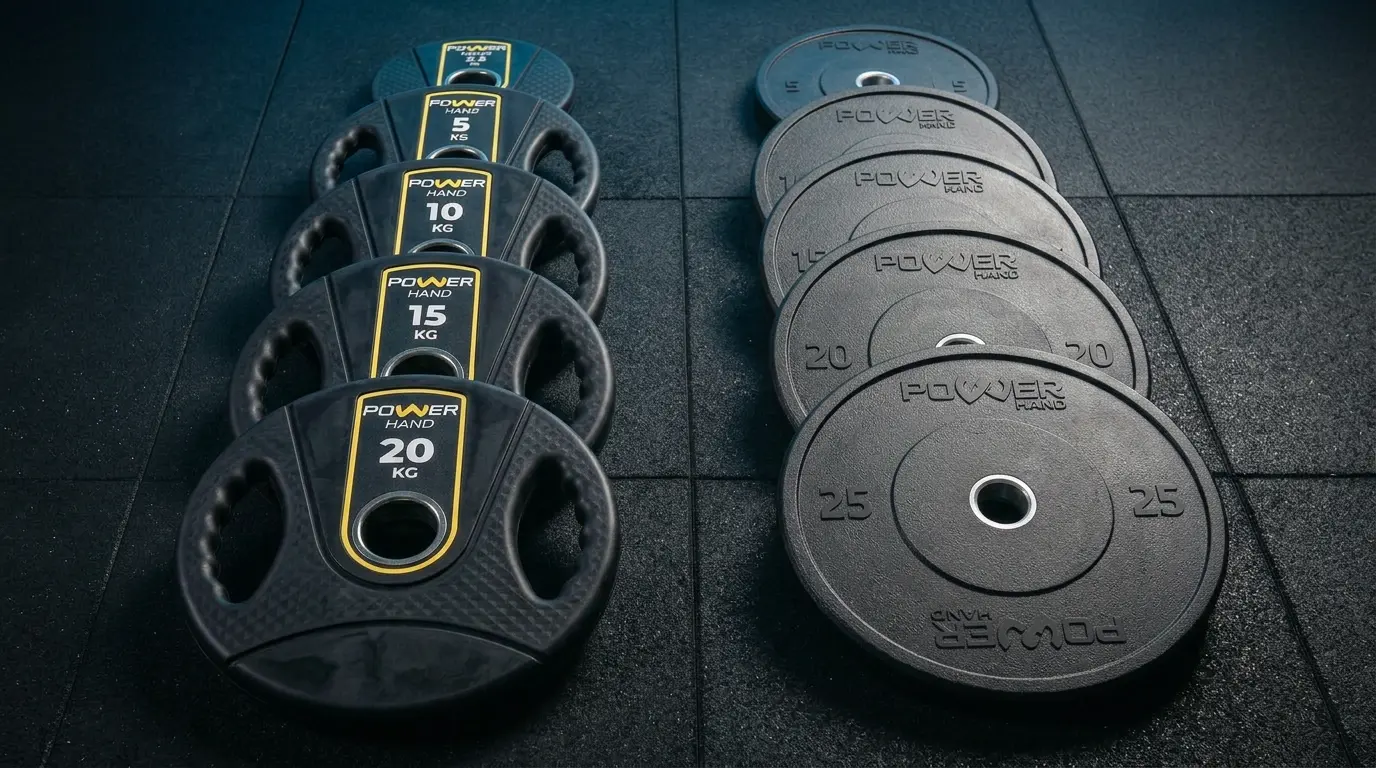
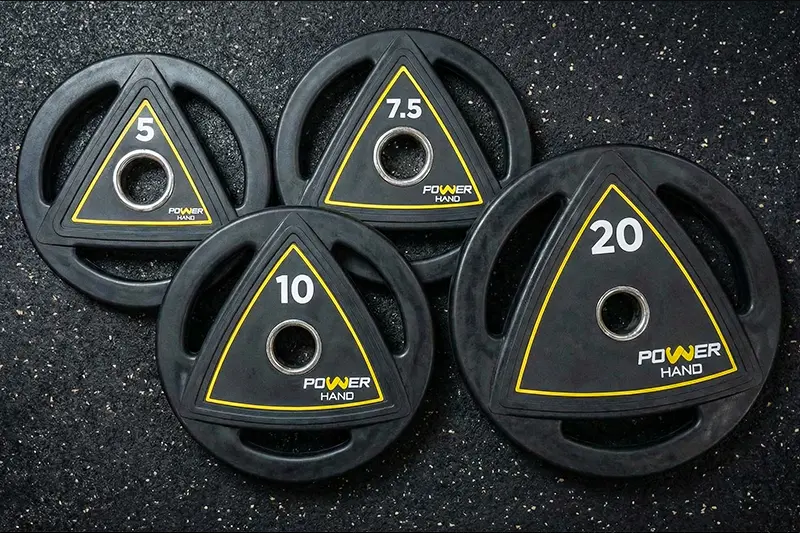
Rubber-coated plates feature a cast iron core encased in a layer of rubber. This combination delivers the density and precision of cast iron with the floor protection and noise reduction of rubber. These plates are the preferred choice for commercial gyms where dropped weights, floor damage, and noise complaints are concerns.
The rubber coating can be virgin rubber for premium applications or recycled rubber for environmentally conscious facilities. Both perform excellently when properly formulated and bonded. The key quality indicator is the bonding method — compression-moulded rubber around the iron core creates a permanent bond, while adhesive-only bonding may fail over time under heavy use.
Bumper Plates
Bumper plates are designed specifically for exercises that involve dropping the barbell from height — Olympic lifts, CrossFit movements, and functional training. They maintain a uniform 450 mm diameter regardless of weight, ensuring the barbell always drops from the same height. The rubber construction absorbs impact energy and provides a controlled bounce.
The cast iron centre hub is the critical structural element. It must be precisely machined and securely bonded to the surrounding rubber. Quality bumper plates can withstand tens of thousands of drops from overhead height without delamination or structural failure.
Weight Standards and Tolerances
International Weightlifting Federation (IWF) competition plates follow strict colour coding and extremely tight tolerances. For commercial gym use, however, these specifications are unnecessary and costly. Commercial-grade Olympic plates maintain tolerances of ±2–3 % — meaning a 20 kg plate may weigh between 19.4 kg and 20.6 kg. This range is perfectly acceptable for bodybuilding, general fitness, and most strength sports.
When evaluating plates, always ask the manufacturer for their documented tolerance standard. Reputable manufacturers test each production batch and can provide inspection data on request.
Colour Coding Conventions
While not mandatory outside competition, many commercial gyms follow the internationally recognised colour coding for quick weight identification: red for 25 kg, blue for 20 kg, yellow for 15 kg, green for 10 kg, and white for 5 kg. Smaller change plates may follow different colour schemes. For private-label orders, custom colours matching your brand identity are available from manufacturers like Anka Force Sport.
Selecting the Right Plates for Your Facility
The choice between plate types depends on your facility's primary use. A bodybuilding-focused gym may prefer cast iron plates for their compact profile and cost efficiency. A CrossFit box needs bumper plates for safe dropping. Most commercial gyms benefit from a combination — bumper plates in the functional training zone and rubber-coated cast iron plates in the general free-weight area.
Consider your budget, training style, noise requirements, and flooring when making your selection. A gym on an upper floor of a building will prioritise rubber-coated plates for noise and impact reduction, while a ground-floor facility with rubber flooring has more flexibility.
Storage and Organisation
Proper plate storage extends equipment life and maintains gym organisation. Plate trees and wall-mounted storage racks keep plates off the floor, organised by weight, and easily accessible. Position storage near lifting stations to minimise carrying distance and encourage re-racking.
Conclusion
Olympic weight plates are a foundational investment for any commercial gym. Understanding the differences between cast iron, rubber-coated, and bumper plates — and knowing when each type is appropriate — ensures you equip your facility for both performance and longevity. Anka Force Sport manufactures all three types at our Çorlu factory, using recycled materials where possible, with no minimum order requirement. Contact us for samples and a tailored proposal for your facility.